
Bill Calendar: Payday Planner for Android
See which paycheck covers each bill
A primary payday schedule defines the pay periods. Each period shows its bills, and a bill can be funded by its due-date paycheck or across earlier paychecks.
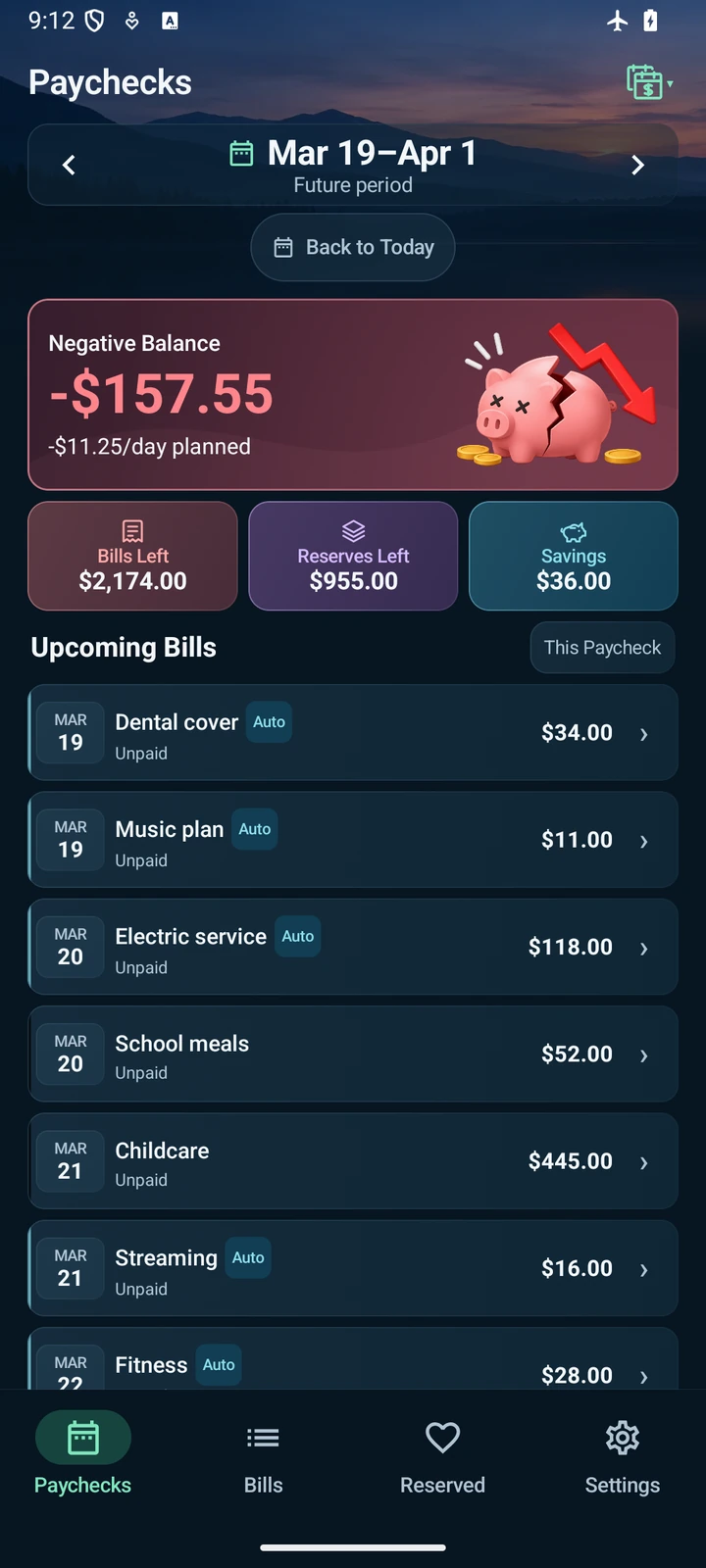
Follow the money from one payday to the next
Enter your pay schedule, bill amounts and dates. Open Paychecks to see what falls in the current period, then move forward to inspect a heavier one. The list gives each bill an amount and payment status, so you can distinguish the bills ahead from those already paid.
A Friday check that has to last into April
In this example, the paycheck arriving Friday, March 19 covers March 19 through Thursday, April 1. The next scheduled paycheck is April 2. A month-end total would split that single spending period across two calendar pages.
| Due date | Bill | Amount |
|---|---|---|
| March 21 | Childcare | $445 |
| March 23 | Car payment | $295 |
| March 24 | Housing share | $620 |
Which date matters for Thursday's rent?
A bill has a due date, an expected withdrawal date and a paycheck that funds it. If rent leaves your account on Thursday, a deposit on Friday cannot cover that withdrawal. You can use an earlier paycheck to fund the bill, or split its funding across eligible paychecks.
When a provider changes a debit date for one month, adjust that occurrence. Changing the funding date in the plan records your intention. A new payment arrangement with the biller needs the biller's agreement.
Common questions
Can a bill leave before a paycheck arrives on the same date?
Yes. Two entries dated Friday can still post hours apart. Check the cash available before the debit. The free Paycheck Budget Planner puts commitments first on a shared date so you can test that order.
What about a month with three biweekly paydays?
Every-other-Friday pay follows 14-day intervals. The third check opens its own period, which may carry next month's rent, reserves or savings. Inspect that period's commitments before treating the third check as extra.
Is there a monthly fee to keep my paycheck plan editable?
A one-time purchase unlocks continued editing. If the trial ends without a purchase, your saved plan remains available to view.